
'If crude remains above $100 per barrel, with restricted retail-price increases, OMCs could face negative petrol and diesel marketing margins, higher LPG under-recoveries, higher crude-landing, freight and insurance costs, working capital and debt accumulation and inventory losses if crude subsequently corrects sharply.'

The search for N Chandrasekaran's successor as Tata Sons Chairman has reportedly narrowed to Tata Steel CEO T V Narendran, Tata Sons Executive Director Saurabh Agrawal, and NSE MD & CEO Ashish Chauhan, with Chauhan emerging as a potential 'dark horse' candidate.

Reliance Jio's reintroduction of Jio Prime membership with a price lock until September 2027 and the retention of its entry-level daily unlimited data plan at ~299 rupees are seen by industry analysts as strong indicators of imminent tariff hikes across the Indian telecom sector.

A Comptroller and Auditor General (CAG) audit for 2024-25 has highlighted Indian Railways' concerning trend of repaying lease charges to its borrowing arm, IRFC, from budgetary grants instead of internal resources, alongside significant delays in safety-centric works.
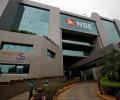
The National Stock Exchange (NSE) has set its initial public offering (IPO) price band at Rs 1,700-1,785 per equity share, with the subscription period running from September 17 to September 21, aiming to raise up to Rs 22,569 crore.

The Supreme Court has directed the Central Bureau of Investigation (CBI) to examine all six allegations of financial irregularities levelled by the Enforcement Directorate against Sameer Gehlaut, former chairperson of Indiabulls Housing Finance (IHFL), and five corporate groups, following repeated criticism of investigating agencies for lack of progress.

Former Chief Economic Adviser Krishnamurthy V Subramanian outlines India's strategy to become a USD 55 trillion economy by 2047. The plan hinges on leveraging its young demographic in AI, dominating sunrise sectors like space and defence tech, attracting FDI, and achieving sustained 8% GDP growth.

Kolkata Knight Riders will aim for nothing less than a win when they clash against Delhi Capitals in the season's final league match of IPL 2026.
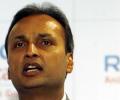
Exuding confidence in setting up a profitable banking venture, industrialist Anil Ambani on Tuesday said the proposed bank will help lower Reliance Capital's debt to one-fourth of current levels and would be listed as a separate entity in three years.

Newly listed companies Vedanta Aluminium Metal, SBI Funds Management and Manipal Health Enterprises have entered the Rs 1 trillion mcap list since March 2026.

Reliance Industries (RIL) delivered a better-than-expected operational performance in Q1FY27, driven by a recovery in its oil-to-chemicals (O2C) business and robust gains in the telecom (Jio) segment, though its retail arm missed estimates. Analysts highlight the upcoming Jio Platforms IPO and execution in new energy and consumer businesses as key triggers for the stock's future growth.

As the world's most populous country, India's economy looks large in the aggregate even as its average incomes stay modest.

'Wages have not risen. Rural wages have stagnated. The growth was 0.7 per cent last year. For casual and irregular labour, the wage growth is negative.'

Reliance Industries Ltd reported a 22 per cent year-on-year decline in consolidated net profit for the June quarter, primarily because the previous year's earnings were inflated by a one-time gain from the sale of its stake in Asian Paints.

Reliance Capital Ltd has posted a net profit of Rs 287.50 million for the quarter ended December 31, 2002 as compared to a net profit of Rs 255.90 million in the corresponding period last fiscal.
A new study by The Energy & Climate Initiative Society (ENCIS) predicts that AI adoption in India's power generation sector will surge from 35% to 65% by 2030, becoming a core operational capability. The study highlights that nearly seven out of ten professionals see power generation as offering the best opportunity for efficiency gains through AI, driven by India's expanding digital infrastructure and significant investments from energy giants. Predictive asset management and proactive maintenance are identified as key areas for AI application, with efficiency being the primary driver for AI investments.

'Improved law and order and transparent governance have helped change UP's investment image.'
Investors are keenly awaiting clarity on Reliance Jio Infocomm's IPO, the company's AI and data centre strategies, and next-generation leadership structure at Reliance Industries Ltd's (RIL's) 49th annual general meeting (AGM).

Mukesh Ambani announced a 10 lakh crore investment by Reliance Industries to revolutionize artificial intelligence in India, focusing on building sovereign compute infrastructure and making AI accessible and affordable for all.

The Reserve Bank of India (RBI) maintained its key policy rates for the fourth consecutive time, keeping the repo rate at 5.25 per cent, while the benchmark BSE Sensex closed 152 points higher in a volatile session, recovering from an intraday dip.

Bharti Airtel, India's second-largest telecom operator, reported a 37.3 per cent rise in consolidated net profit to 8,167 crore for Q1 FY27, driven by the addition of high-paying premium customers, despite missing Bloomberg consensus estimates.

India's fresh investment plans in Q1FY27 surged 71 per cent to 14.77 trillion, primarily driven by four large nuclear power projects worth 6.5 trillion, according to investment monitoring firm Projects Today. Excluding these nuclear projects, fresh investment plans actually declined 4.27 per cent quarter-on-quarter.
Jio Platforms Ltd, the digital services arm of Reliance Industries, has filed draft papers for an initial public offering (IPO) aiming to raise approximately USD 4 billion (about Rs 37,700 crore), which is expected to be India's largest ever IPO.

In a strategic move to boost offshore energy exploration and operational efficiency, Oil and Natural Gas Corporation Ltd (ONGC) and Reliance Industries Ltd have signed an agreement to share resources such as supply vessels used in finding and producing oil and gas.

The Budget emerges as a measured, credible and forward-looking policy document that reinforces India's commitment to remaining a stable, reform-oriented economy amid an increasingly fragmented global landscape, says A Balasubramanian.

Brokerages are forecasting a strong first quarter (April-June/Q1) for Reliance Industries Ltd (RIL) in FY2026-27, with double-digit revenue growth, Ebitda increases of around 12 per cent, and net profit rising up to 10 per cent, primarily driven by its oil-to-chemicals (O2C), retail, and Jio businesses.

Bharti Airtel added 7.64 trillion in value over the past five years, making it the biggest wealth creator in India's private sector, while the IT sector, including TCS, Infosys, and Wipro, collectively lost 8.5 trillion in value, according to the latest Burgundy Private Hurun India 500 report.

The unprecedented rally in artificial intelligence (AI)-linked stocks has led to Indian companies being excluded from the top 10 constituents of the MSCI Emerging Markets (EM) Index for the first time in over two decades, raising concerns about concentration risk.

'The West Asia or the Gulf crisis has shown that what we develop as national infrastructure when things are not as bad as they could be, we forget to plan for adversities.'

India's Goods and Services Tax (GST) collections saw a significant 14 per cent increase in June, reaching approximately Rs 1.95 lakh crore. This surge was primarily driven by a substantial 34.6 per cent growth in tax mop-up from imports, alongside a 6.5 per cent rise in domestic supplies, reflecting the country's economic resilience despite global uncertainties.

India's Central government is likely to see its fertiliser subsidy bill double to a record 3.4 trillion in FY27, up from the Budget estimate of 1.7 trillion, due to surging global fertiliser prices exacerbated by the West Asia war. This significant increase, coupled with revenue losses from excise duty cuts for oil-marketing companies, is straining the government's fiscal space, though capital expenditure plans remain unchanged.

Moody's Ratings has reduced India's GDP growth forecast for 2026 to 6 per cent, citing subdued private consumption, capital formation, and industrial activity due to higher energy costs and global uncertainties.

Moody's Ratings has highlighted that Indian banks are among the most exposed in the Asia-Pacific region to the West Asia crisis, primarily due to India's high dependence on energy imports, which could lead to increased inflation, higher interest rates, and strained borrower cash flows.

Eighteen of India's 28 states exceeded the fiscal deficit ceiling of 3 per cent of GSDP in FY25, a deterioration comparable to the Covid year of 2020-21, according to the Comptroller and Auditor General (CAG). The report also noted a decline in states reporting a revenue surplus, with Bihar, Mizoram, and Telangana moving into deficit.

ICICI Bank, Eternal, Titan, Adani Ports, Tata Consultancy Services and UltraTech Cement were also among the laggards. However, InterGlobe Aviation, Tech Mahindra, Hindustan Unilever and Bajaj Finance were among the gainers.

Reliance Industries' digital arm, Jio Platforms, may see its initial public offering (IPO) delayed to the second half of fiscal 2027, according to CreditSights. The delay is primarily attributed to ongoing geopolitical tensions in the Middle East, which could impact market conditions and investor sentiment.

Indian multinational conglomerate Reliance Industries and Surrey County Cricket Club on Wednesday announced their partnership in The Hundred and expectedly renamed the franchise MI London.

A potential US-Iran peace deal, expected to be signed on June 19, is anticipated to ease geopolitical stress and benefit various sectors, particularly in India, with analysts suggesting investors await finer details before making significant moves.

Foreign Portfolio Investors (FPIs) withdrew nearly Rs 33,000 crore from Indian equities in May, bringing the total outflow for 2026 to Rs 2.25 lakh crore, driven by weak earnings growth, rupee depreciation, and more attractive opportunities in other global markets.

The global artificial intelligence (AI) boom has significantly reshaped equity markets, with Taiwan surpassing India to become the world's fifth-largest stock market. India has seen its market capitalisation decline by 7% year-to-date, while AI-linked economies like Taiwan and South Korea have surged.
